Before a single shovel breaks ground on a modern construction site, crews need accurate information about underground utilities. Knowing where buried infrastructure sits is not just helpful—it is essential. Traditional utility locating methods, such as ground-penetrating radar and electromagnetic locators, help identify the approximate horizontal position of utilities. However, many projects require visual confirmation before excavation begins. That is where utility daylighting comes in.
Utility daylighting, often performed with hydrovac excavation, provides the exact information contractors, engineers, and project managers need before heavy equipment enters the work zone.
What Is Utility Daylighting?
Utility daylighting is the process of safely exposing underground utilities to verify their exact location, depth, orientation, material, and condition. Rather than relying on utility maps or surface markings alone, daylighting provides direct visual confirmation. As a result, project teams can make informed decisions based on actual field conditions instead of assumptions.
Daylighting vs. Potholing: Is There a Difference?
Although many professionals use these terms interchangeably, they describe slightly different activities.
- Potholing typically involves digging a small test hole, usually 6 to 12 inches in diameter, to verify a specific point along a utility line.
- Daylighting involves exposing a larger section of a utility or several intersecting utilities to reveal their full path before excavation, installation, or tie-in work begins.
The Role of Daylighting in Subsurface Utility Engineering (SUE)
Daylighting plays a critical role in Subsurface Utility Engineering (SUE). Engineers use SUE to identify, map, and manage underground utility risks throughout the planning and construction process.
SUE classifies utility information into four quality levels:
- Quality Level D (QL-D): Information gathered from existing records, maps, and utility databases. This level carries the highest degree of uncertainty.
- Quality Level C (QL-C): Data obtained by surveying visible utility features such as manholes, valve boxes, and utility markers.
- Quality Level B (QL-B): Information collected through geophysical locating methods, including ground penetrating radar and electromagnetic locators. This level identifies the approximate horizontal position of utilities.
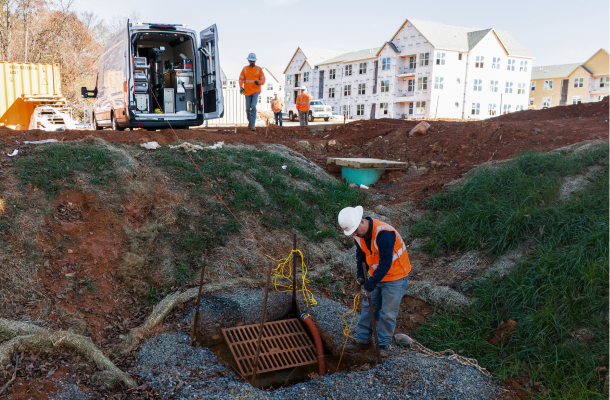
- Quality Level A (QL-A): The highest level of accuracy. Crews physically expose the utility through non-destructive excavation to verify its exact horizontal and vertical location, size, material, and condition.
When project teams use hydrovac excavation to achieve SUE QL-A data, they significantly reduce uncertainty. Consequently, they can avoid costly delays, redesigns, and utility conflicts. NG Companies provides these services in collaboration with Safe Site LLC.
Hydrovac vs. Traditional Excavation Methods
Using a backhoe, excavator, or mechanical auger near live, high-risk utilities is inherently dangerous. One wrong move can slice a fiber optic cable, puncture a high-pressure gas main, or breach a water line. Hydrovac excavation changes the game by using two synchronized systems:
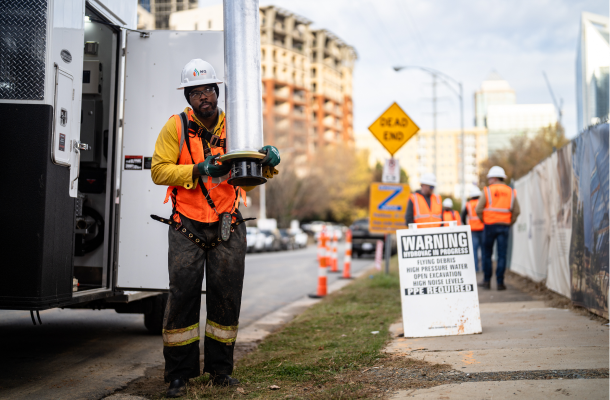
- High-Pressure Water: Pressurized water is directed through a handheld wand to precisely liquefy, break up, and loosen the soil.
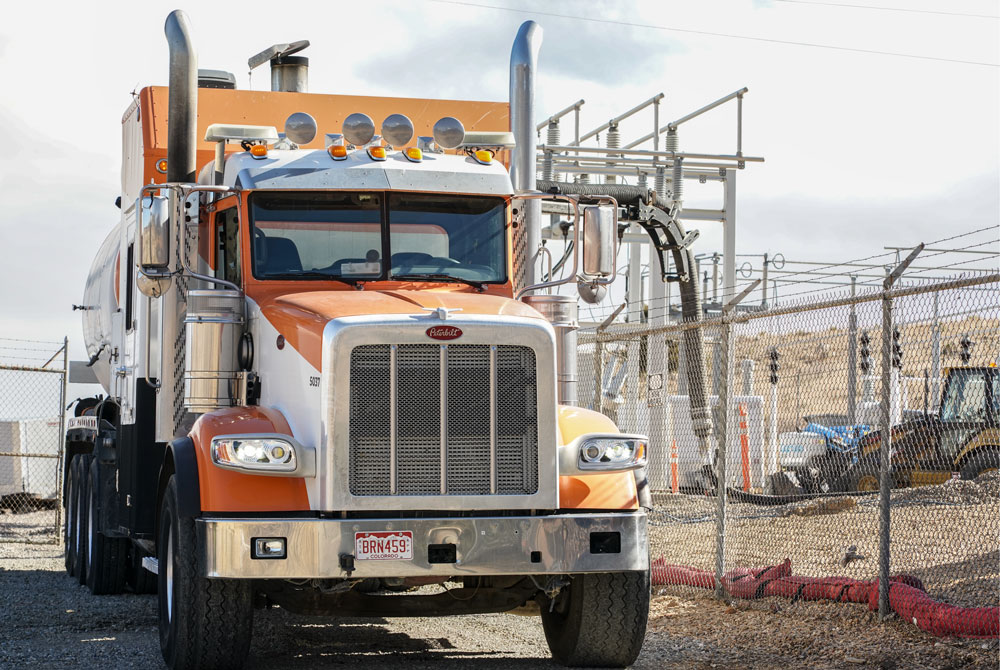
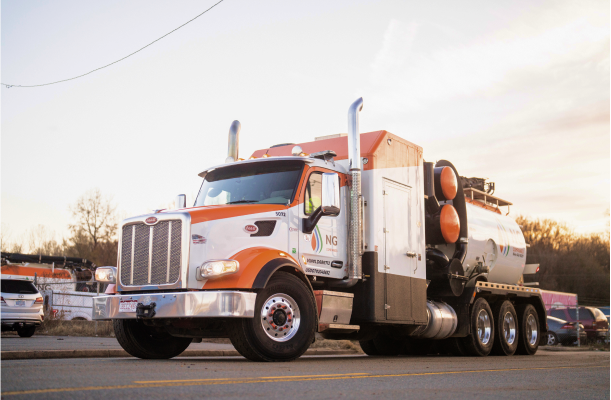
- Powerful Vacuum System: A high-volume vacuum blower simultaneously suctions the slurry (water and mud) through a large hose and deposits it cleanly into a truck-mounted debris tank.
Air Excavation vs. Hydro Excavation: The Ultimate Debate
When selecting a non-destructive vacuum excavation method for daylighting, contractors generally choose between Hydro Excavation (Water) and Air Excavation (Air). Both have their place, but they function differently:
- Hydro Excavation: Uses high-pressure water. Water acts as a natural lubricant, making it incredibly fast and highly effective at cutting through hard-packed clay, rocky ground, and frozen soil. The downside is that the resulting slurry must be disposed of at a designated dumping facility, and dry backfill material must be brought in.
- Air Excavation: Uses compressed air to break up soil. The primary benefit of air is that the soil remains dry. This means the excavated dirt can often be left on-site and used immediately as backfill. However, air is significantly slower than water when dealing with heavy clay, compacted soils, or frozen ground.
Why Hydrovac Daylighting Matters: The Core Benefits
1. Eliminating Accidental Utility Strikes
Failure to verify the exact location of underground utilities before digging remains a leading cause of infrastructure damage. Puncturing a utility line triggers a chain reaction of negative consequences:
- Safety Hazards: Severe risks of explosions (gas), electrocution (electric), or flooding (water).
- Financial Penalties: Massive liability fines from regulatory bodies and utility owners.
- Reputational Damage: Loss of future contract bids due to poor safety records.
2. Radical Cost Savings and Fewer Change Orders
When engineers can physically see the utility network through a daylighted pothole during the design phase, they can design around it with millimeter accuracy. This proactive approach eliminates the “unexpected discoveries” mid-project that lead to incredibly costly change orders, emergency design updates, and idle construction crews.
3. Ability to Access Remote or Congested Spaces
Urban environments are crowded with complex utility corridors. Hydrovac trucks offer incredible flexibility because they don’t need to be positioned directly over the dig site. A hydrovac truck can park hundreds of feet away (on a main road or parking lot) and run extendable vacuum hoses over fences, around buildings, and into tight spaces where a massive mechanical excavator physically cannot fit.
Step-by-Step: How the Hydrovac Daylighting Process Works
The execution of a standard hydrovac utility daylighting operation follows a precise sequence to ensure maximum safety:
- 811 Call & Ticket Verification: Before the hydrovac crew arrives, the site must be marked by the local utility locating service (e.g., 811 “Call Before You Dig”) to establish the approximate horizontal paths of the utilities.
- Setting Safe Equipment Parameters: The hydrovac operator adjusts the water pressure (PSI) and temperature based on the specific utilities suspected to be underground (e.g., lower pressures are used for direct-buried fiber optic cables than for cast-iron water mains).
- Precision Cutting: The operator uses the water wand to cut a precise, vertical shaft directly over the target area, while the vacuum boom instantly sucks up the displaced mud.
- Visual Verification & Logging: Once the utility line is exposed, technicians document its exact depth, size, material, and directional orientation. This data is often logged via GPS mapping software.
- Safe Backfilling or Protection: The pothole is either temporarily covered with a heavy utility lid/plate for engineering inspection or backfilled with a stable material like pea gravel or flowable fill to restore surface integrity.
The Bottom Line: Dig Safe, Dig Smart
Underground utilities represent one of the highest financial and safety risks on any construction or civil engineering project. Hydrovac utility daylighting successfully bridges the gap between old paper maps and real-world underground conditions. By investing in non-destructive vacuum excavation before heavy construction begins, you actively protect your budget, your timeline, and, most importantly, the lives of your crew.
Partner with the NG Companies, The Hydrovac Experts
Ready to eliminate the guesswork on your next excavation project?
Don’t risk costly utility strikes or project delays. Protect your team, your budget, and your timeline with precision hydrovac daylighting.
Contact us today to speak with our experts or request a free quote for your next job site.

 About NG CompaniesLearn more about NG Companies’ values, missions, and why we’re the right choice to partner with you.
 SafetyLearn more about how we keep our people, our partners, and the public safe.
 NewsLearn more about how we keep our people, our partners, and the public safe.
 Our WorkTo learn the scope and caliber of NG Companies’ work, explore our proud body of work.
 OverviewDiscover how we deliver the highest level of damage prevention to ensure safety on all of your projects.
 Video Pipe InspectionLearn how we operate our 360° video pipe inspection to ensure accuracy and precision.
 HydrovacUnderstand what sets NG Companies apart with leading and precise industry technology.
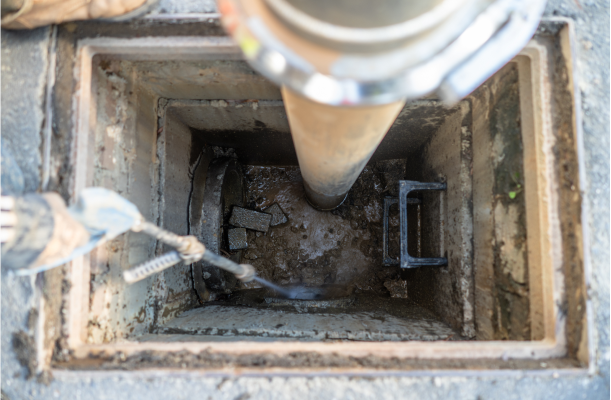 Hydro JettingLearn about NG Companies’ abilities to clear build-up and debris, damage assessment, and utility restoration.
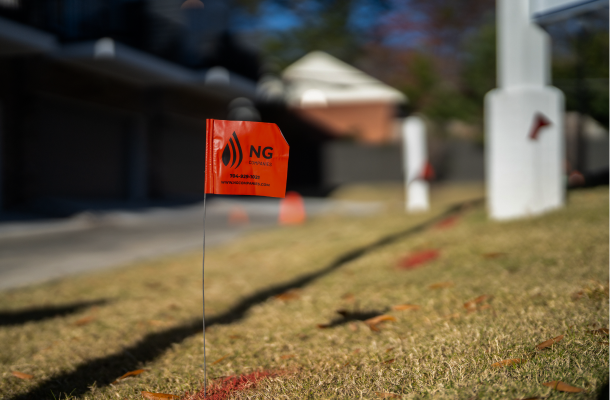 Utility LocatingNG Companies will provide swift and accurate utility locating services. Learn more about how we do it.
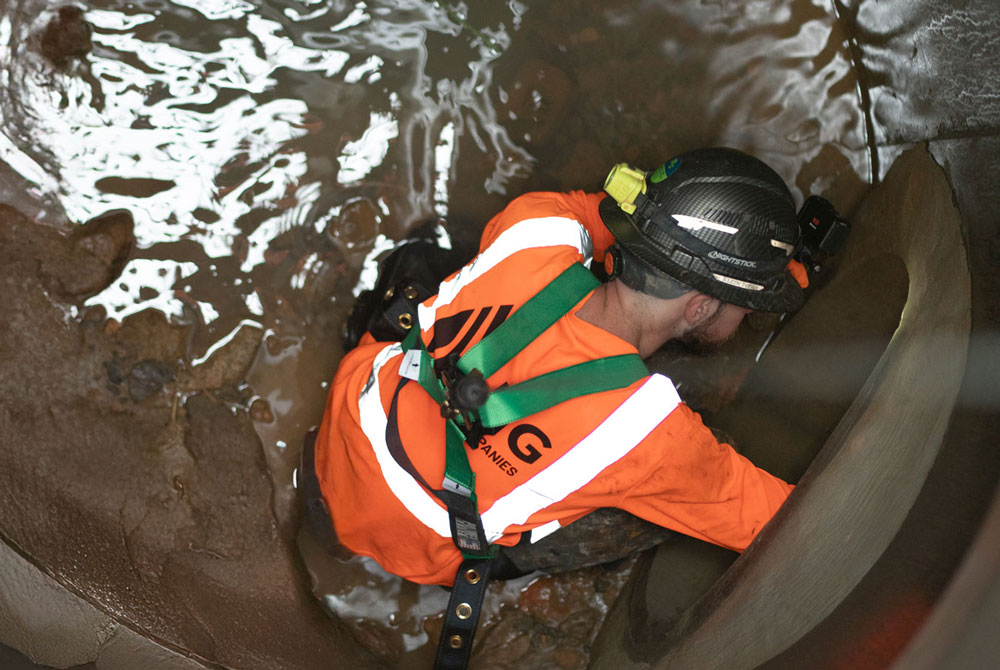 Trenchless Pipe RepairTrenchless pipe repair for fast, no-dig sewer and water line restoration with minimal disruption and lower costs.


 All Posts


